Tuesday, December 29, 2020

 2020:  The year in books

I am proud to say that this year (unlike last) I met my reading challenge goal on Goodreads of 65 books.  Here are some thoughts on a few of those titles:


THE FIVE BEST BOOKS I READ THIS YEAR

·     
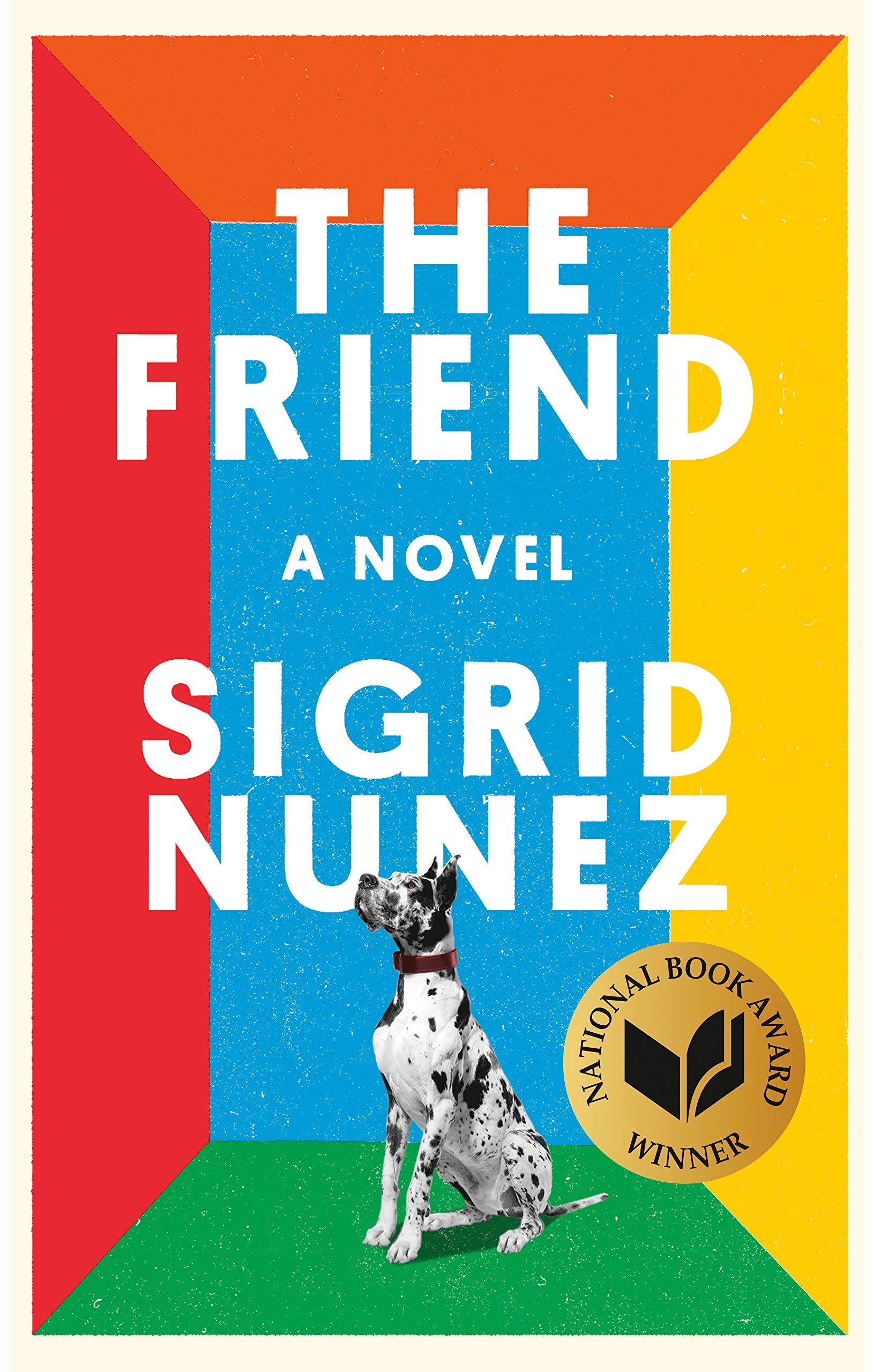

 I heard Sigrid Nunez speak at the National Book Festival in the fall of 2019 and was prompted to read her latest book (at the time), The Friend.  The novel opens with an anecdote about women in the 1980’s in California who were Cambodian war refugees who complained to doctors that they couldn’t see.  The doctors found nothing wrong with their eyes or brains and, while some thought it was malingering, others concluded that it was a psychosomatic response to the trauma they had experienced. With this account, Nunez establishes several motifs that run throughout the novel:  blindness, men who mistreat or don’t believe women, and the consequences of grief.  The ideas soon come together again when the narrator, a woman who has just lost her friend to suicide, says, “It’s true that if you cry hard enough for long enough you can end up with blurred vision” (3).  The narrator reluctantly, and against her apartment house rules, ends up taking her friend’s dog because wife number 3 doesn’t want him and says the friend wanted her to have him. The development of the relationship with the dog seems important to the woman in healing from her grief. The book is not a straightforward story, often meandering off in a series of anecdotes or a commentary about writing and books.  The narrator and her friend are college professors and writing teachers (like the author).  The book is full of eloquent thoughts and while there’s a story to enjoy, the best part is the reader’s access to the narrator’s thoughts and feelings.


·      I have always loved Ann Patchett’s books and her newest, The Dutch House, is a wonderful book about memory and the lasting effects of childhood.  In this respect, it reminded me a bit of Fifth Business in which the narrator traces the relationships and patterns of behavior in later years back to a pivotal childhood event.  Here, Danny and Maeve, brother and sister, are first traumatized by the departure of their mother to India when they are 3 and 11, respectively, and then later by the addition of a new, young stepmother who throws them out when their father dies (shades of Cinderella).  Over the next several decades, Danny and Maeve find themselves parked outside The Dutch House, the name for the family home from which they have been evicted and are no longer welcome, reliving and rehashing events from the past.  One of the more interesting aspects of the novel is that characters both remember events differently and have varying amounts of knowledge. Tom Hanks reads the book and I think that is in part why I liked it so much.  He brings Danny to life and makes it easy to see things from his point of view. 
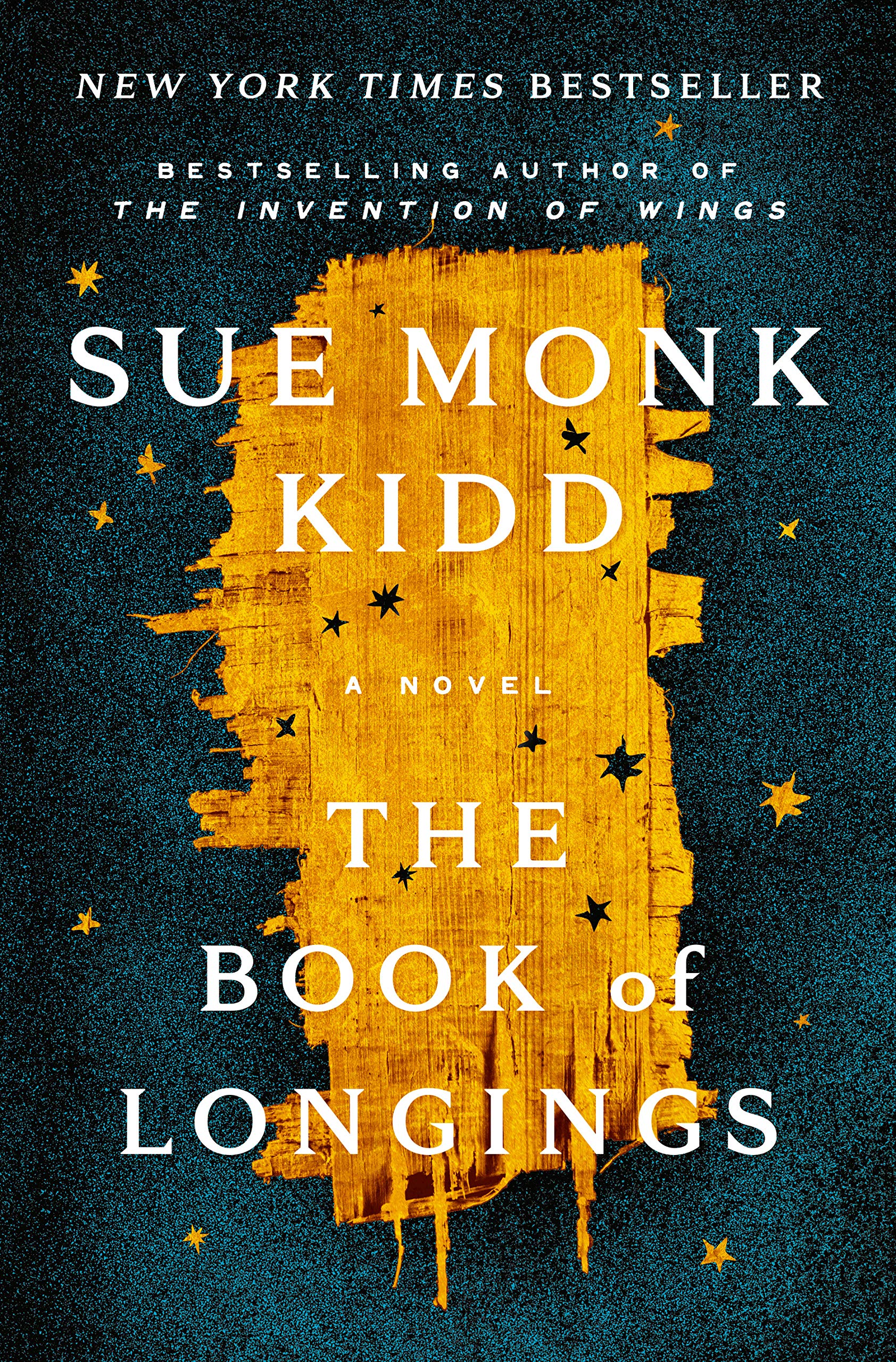
 

·      The Book of Longings by Sue Monk Kidd begins: “I am Ana.  I was the wife of Jesus ben Joseph of Nazareth” (3), but this turns out to be but one of many identities for Ana and not the central focus of the story.  Ana is a strong young woman who loves reading and, most of all, writing.  Kidd plays with the idea that Ana is one of the authors of the scrolls found at Nag Hammadi, which perhaps provide evidence of a wife for Jesus and, more convincingly, women in his ministry. While Kidd skirts the issue of whether Jesus is the son of God, she does a great job of re-creating a sense of time and place and, in her heroine, she has created a woman who is both modern in spirit and ambition and who deals bravely and fiercely with the constraints of her world.  
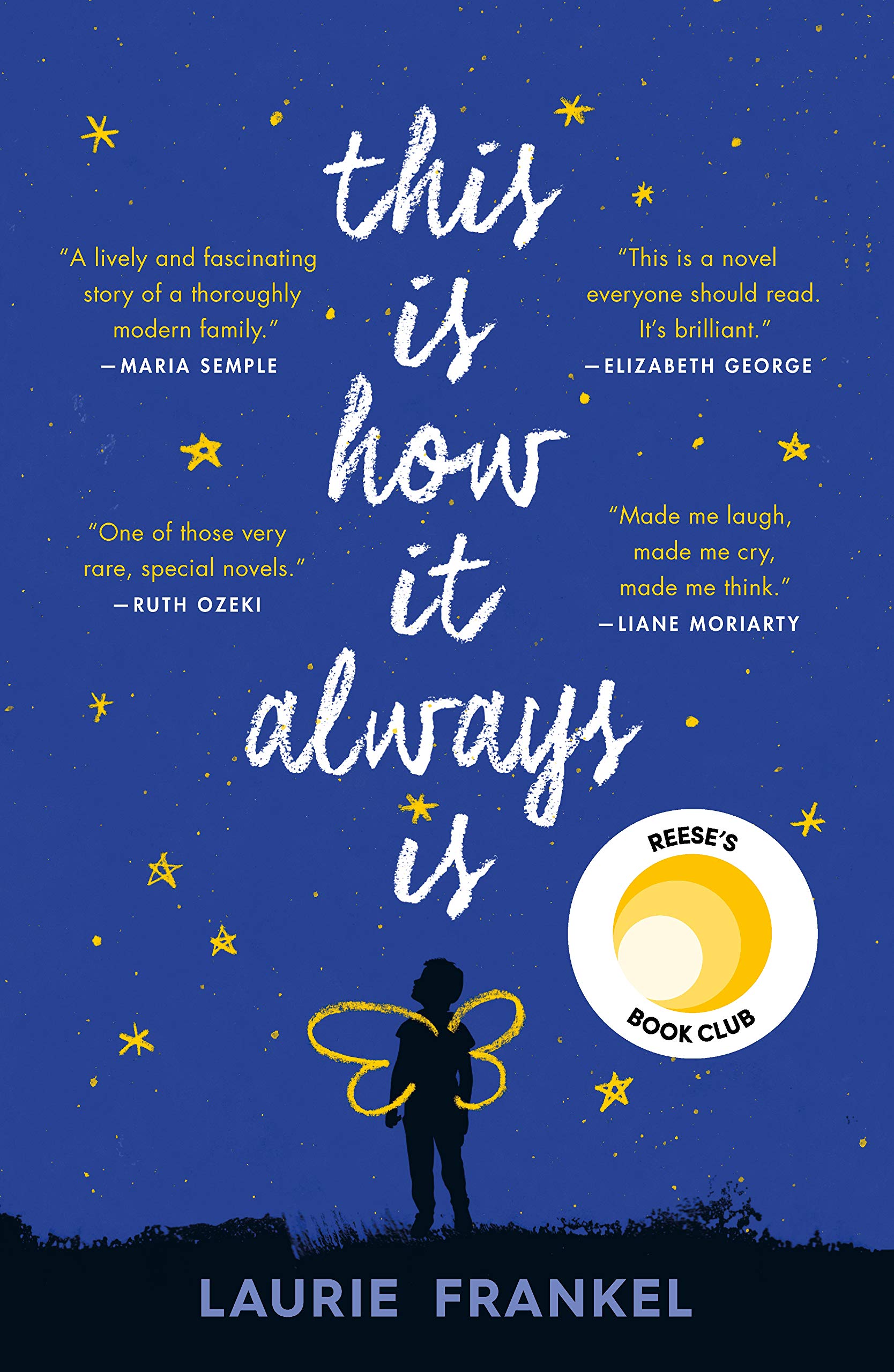


·      Perhaps my favorite read of the whole year is Laurie Frankel’s This Is How It Always Is, a novel that tackles the complicated lives of a family with a transgender child.  One morning when he is five years old, Claude comes down to breakfast in a dress with earrings and he wants to take a purse to school.  He also declares that he wants to be a princess when he grows up.  Thus begins a ten year odyssey for the Walsh-Adams clan (Mom Rosie, Dad Penn and the five boys) as they try to embrace the choices of this youngest child whom they love while protecting him/her from a culture that is less supportive. The novel never shies away from presenting the challenge of navigating the world for a child and her family in which one doesn’t conform to the mold.  It’s a book that makes you laugh, tear up and mostly think.
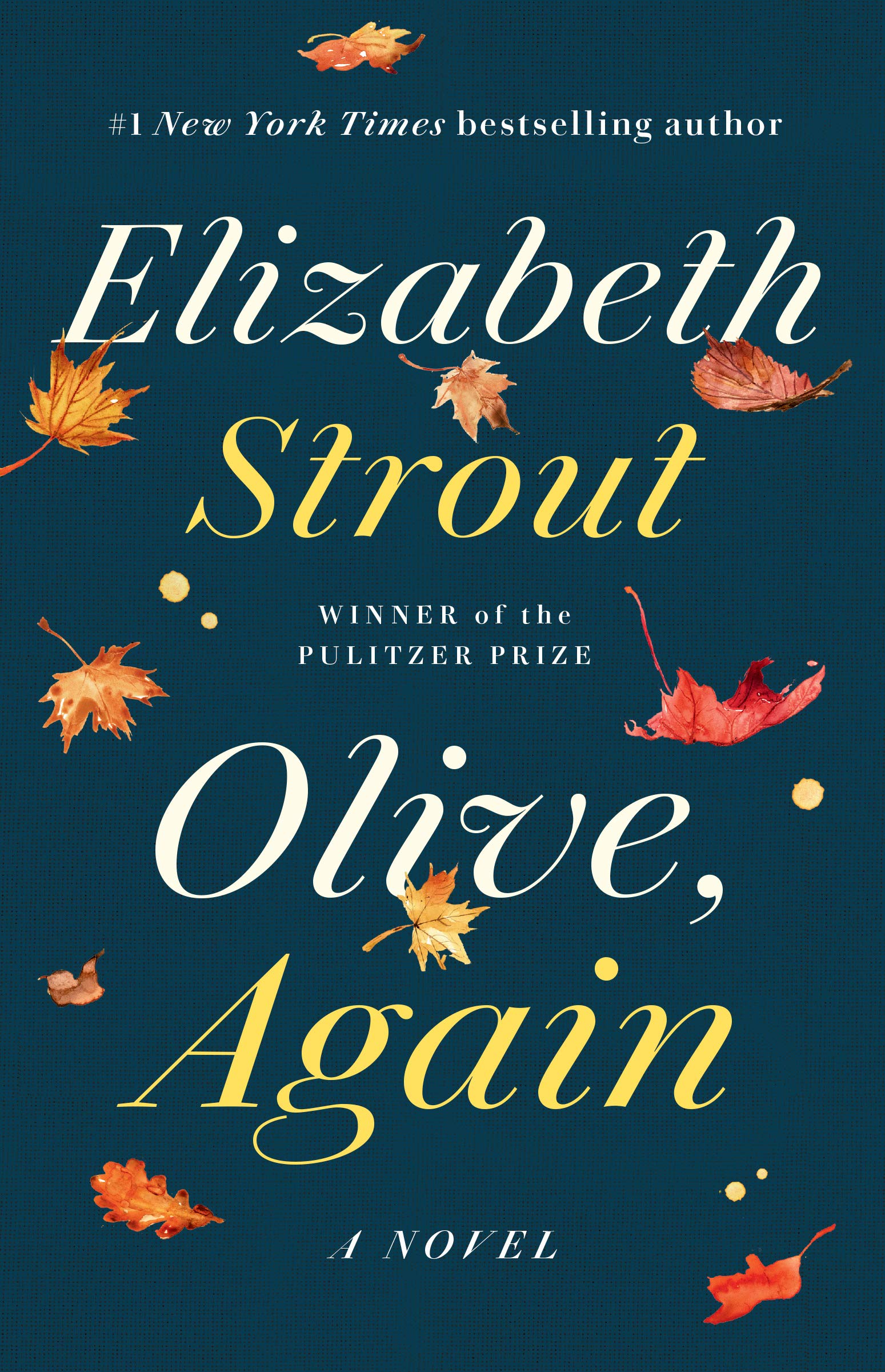
 

·      A follow-up to Strout’s Olive Kitteridge, which won the Pulitzer Prize in 2009, Olive, Again returns to Crosby, Maine, the small town in which Olive lives.  Like the first book, the story is told through a series of interconnected short stories in which Olive is either the protagonist or, in a few cases, a minor character.   The effect of occasionally shifting Olive to the background is to provide the reader with a different perspective of the title character, which is central to one of the book’s main themes, that of Olive coming to terms with the disparity between how she sees herself and the world and an outer reality. In the first book, we meet Olive, a retired math teacher married to Henry, a man who sees his marriage to Olive as both a blessing and a curse.  Olive appears to the reader as a bit of a curmudgeon who doesn’t like change and who often alienates people with her matter-of-fact manner.  As the second book begins, Olive is in her 70’s, now a widow, and estranged from her only son, Christopher, who is married to Ann, a woman Olive doesn’t much like.  Olive is now coming to terms with what it means to grow old and to reflect on choices that she has made that have had far-reaching consequences.  You don’t have to have read the first book to enjoy this one, but it is a richer experience if you are able to see the transformation of Olive over several decades.  


Also Recommended:

 In A Burning by Megha Majumdar, three characters in modern India who are all striving for greater position in their society become connected in the wake of a disaster.  


Kevin Wilson’s Nothing to See Here possesses surprising depth and pathos despite the rather humorous element of two children who, when upset, spontaneously burst into flames.  


In The Vanishing Half by Brit Bennett, two sisters raised in an African American town where people aspire to literally become whiter, choose different futures:  one embraces her Black heritage while the other passes as White.  


I love pretty much everything that Frederik Backman writes and that includes
his latest, Anxious People.  A group of seeming strangers comes together and is held hostage at an apartment showing, but they gradually realize their surprising connections.  


Jodi Picoult’s latest, The Book of Two Ways, opens with a plane crash in which the protagonist, Dawn, survives.  As the plane is going down, she is shocked to find that she is thinking not of her husband and daughter in Boston, but rather of her long-lost love whom she left behind in Cairo.  Fifteen years earlier as a graduate student in archaeology, she was obsessed with the Egyptian “Book of Two Ways,” which was buried in the tombs and which provided two different options for the dead to reach the afterlife.  Picoult plays with this dual route idea by alternating chapters between a life for Dawn with her archaeologist and the life she originally chose when she returned to the United States.  


I am a huge mystery reader who has this year missed the opportunity to leave the house/the state/the country, and if you are too, you can get a twofer (mystery and vicarious travel) with the newest books by Tana French (set in Ireland), Denise Mina (set in Scotland), Louise Penny(set in Paris), Robert Galbraith a.k.a. J.K. Rowling (set in England) and Donna Leon (set in Venice).   


The book I most wanted to like but didn’t:  Dear Edward by Ann Napolitano

Recommended by several friends whose taste I respect and grabbing a spot on several “Best Books of the Year” lists, clearly there’s something to be said for this book. . .but I just didn’t get it.  Edward, a 12 year-old boy who is moving cross-country with his family finds himself the only survivor of a crash in which 191 other people are killed.  This distinction brings with it a strange sense of notoriety in which people travel great distances just to see him and survivors of the plane’s victims reach out to him in letters.  The chapters alternate between Edward’s attempts to go on with a “normal” life while coping with the trauma and back stories of some of the people who were on the plane as well as a recounting of the few hours of the flight itself.  I didn’t understand the point of developing the characters who you knew from page 1 were dead. It seems like there was plenty of material in Edward’s story alone.


Worst Book I Read This Year: The Coast to Coast Murders by James Patterson and J.D. Barker 

I reluctantly read this after my 90-year-old father pushed it into my hands and said, “Read this and explain the ending to me.”  I threw it on the pile to be forgotten but two weeks later he asked if I had finished.  My dad doesn’t ask much of me, so I decided to go ahead and read it.   I understand that James Patterson was good at one point in his career but since he started churning out books with co-writers at the rate of 5 or 6 a year, I think there is little quality control.  Despite alternating between several different narrators, there was no change in voice.  There was also very little description and what little there was – of gruesome murders – was unpleasant.  


Most disappointing book:  Ready, Player Two by Ernest Cline.

Cline’s first book, Ready, Player One, was a page-turning inventive romp through a virtual world.  The much-awaited sequel offers absolutely nothing new.  The plot is almost identical and all of the allusions to -80’s culture that were fresh and clever before now just seem repetitive and stale.


And finally, I keep track of the books that I have read on Goodreads, which allows you to set up a yearly reading challenge, and provides you with year-end statistics that only a true book nerd can appreciate .

Shortest book read – The House by Michael McDowell – 173 pages

Longest book read – Troubled Blood by Robert Galbraith – 944 pages

Average book length in 2020 – 355 pages

Most popular – The Silent Patient by Alex Michaelides – 1, 197, 697 readers on Goodreads (Which I gave 3 stars)

My average rating:  3.6 stars


Wednesday, September 9, 2020

 Two great recent reads that create heart-warming characters while challenging you to think


This Is How It Always Is by Laurie Frankel is definitely one of the best books I have read this year, the novel tackles the complicated lives of a family with a transgender child.  One morning when he is five years old, Claude comes down to breakfast in a dress with earrings and he wants to take a purse to school.  He also declares that he wants to be a princess when he grows up.  Thus begins a ten year odyssey for the Walsh-Adams clan (Mom Rosie, Dad Penn and the five boys) as they try to embrace the choices of this youngest child whom they love while protecting him/her from a culture that is less supportive. Rosie and Penn have repeated discussions to determine the right course of action.  Early on, they consider how difficult a life Claude might have and whether they should dissuade him.  “’Easy is nice, but it’s not as good as getting to be who you are or stand up for what you believe. . .Having children, helping people, making art, inventing anything, leading the way, tackling the world’s problems, overcoming your own.  I don’t know.  Not much of what I value in our lives is easy’” Penn tells his wife .“’But it’s terrifying,’ she whispered. ‘If it were the right thing to do, wouldn’t we know it?’”   (84) Penn reminds her that they never know if they are doing the right thing in regard to their children.  “’You never have enough information.  You don’t get to see the future’” (84) She responds, “So the comfort you can offer me about sending our son to school next week dressed as a girl fairy is that it seems like a good guess’” (85).  This is an abbreviated version of the conversation, but it captures so accurately the complexity of parenting and the constant second-guessing that parents do.  It only gets harder when the stakes are high.  


Claude shows up at school in his fairy attire and “The kindergarteners were unfazed.  Very little is unalterable as far as five year olds are concerned.  Very little doesn’t change” (90).  But of course “the older kids had some questions” and the taunting begins.  The family decides to leave Ann Arbor and, after exhaustive research by Rosie on liberal communities, decides on Seattle.  Claude becomes Poppy and no one in their new town is the wiser, which leads to a consideration of secrets and the difficulty in keeping them.  Eventually, Poppy is outed and there’s a bit of a mystery about who spilled the beans.  In the last third of the book, Poppy is an adolescent starting to deal with the harshness of the outer world from which her family has protected her for so long.  


The book is somewhat based on the author’s own experience, however she states in an afterword, “This book is fiction.  My child is neither Poppy nor Claude.  I am not Rosie. . .this book is an act of imagination, an exercise in wish fulfillment. . .We imagine the world we hope for and endeavor, with the greatest power we have, to bring that world into being.”  This would suggest that perhaps the world of the novel is slightly more forgiving, the choices a bit easier.  Still, it never shies away from presenting the challenge of navigating the world for a child and her family in which one doesn’t conform to the mold.  It’s a book that makes you laugh, tear up and mostly think.


Olive, Again by Elizabeth Strout is a follow-up to Strout’s Olive Kitteridge, which won the Pulitzer Prize in 2009, this second volume returns to Crosby, Maine, the small town in which Olive lives.  Like the first book, the story is told through a series of interconnected short stories in which Olive is either the protagonist or, in a few cases, a minor character.   In the first book, we meet Olive, a retired math teacher married to Henry, a man who sees his marriage to Olive as both a blessing and a curse.  Olive appears to the reader as a bit of a curmudgeon who doesn’t like change and who often alienates people with her matter-of-fact manner.  As the second book begins, Olive is in her 70’s, now a widow, and estranged from her only son, Christopher, who is married to Ann, a woman Olive doesn’t much like.  There’s an awkward visit from Christopher and Ann and their children, two of whom are Ann’s from a previous marriage.  Olive is only interested in the child that is biologically related to her, presenting him with a scarf she has knitted for him while the other children get nothing. This is typical of Olive’s blind spots; she doesn’t understand why anyone would expect her to provide gifts for children who are not technically her son’s.  


 Olive is wooed by a widower Jack Kennison, a man with a receding hairline and a large belly, who seems beneath her notice until she slowly recognizes a kindred spirit, one who, like herself, is lonely.  Olive finds love again with Jack but in private moments, reminisces about Henry, and Jack talks frequently of his wife, Betsy.  Reconciling the past and the present is a motif that runs through the stories.  Strout does a good job of showing that old age is every bit as complex as adolescence.  As society gradually turns a dismissive eye toward the geriatric crowd, old people are still lovers, dreamers, and thinkers who must now deal with the betrayal of their bodies and reckon with decades of choices.  


The effect of occasionally shifting Olive to the background is to provide the reader with a different perspective of the title character, which is central to one of the book’s main themes, that of Olive coming to terms with the disparity between how she sees herself and the world and an outer reality.  One memorable story involves a woman whom Olive taught as a child who went on to become a poet laureate, but who now seems down on her luck.  Olive meets her in a coffee shop and they talk and Olive tells her that she, the poet, has always been a lonely person, even as a child.  Later, someone gives Olive a copy of a magazine that includes the woman’s latest poem which, turns out to be about the conversation with Olive and what a lonely old woman Olive is.  The unflattering portrait that the poet creates startles Olive but also leads her to reflect on the truths that sit before her on the page.  


For all of her crotchety behavior, Olive is also warm-hearted and can be unfailing kind as demonstrated in a chapter in which she regularly visits a very ill woman she had not really known before.  She also sees beauty in a sunset, in the smell of the forest, and in the blooming of flowers.  “Boy did that make her happy, the sight of that new fresh rosebud.”  Although Olive is described as a big woman – tall and large-boned, not fat – I picture her as Mrs. Maguire, a small, rounder woman,  in the Masterpiece series Grantchester.  In the show, Mrs. M, like Olive, is judgmental, hard-headed and often frustrating to be around, but underneath there is a warmth and loyalty to those she loves.  You don’t have to have read the first book to enjoy this one, but it is a richer experience if you are able to see the transformation of Olive over several decades.  


Friday, July 10, 2020

Beach Blog 2020


Drive to the beach (June 20, 2020) – finished listening to The Care and Feeding of Ravishingly Hungry Girls by Anissa Gray.  Althea and Proctor are arrested for holding charity events and then keeping the money.  Turned in by their teenage daughter, Kim, they sit in jail as the story opens, awaiting their trials.  Meanwhile, Althea’s youngest sister Lillian reaches out to their middle sister, Viola, begging her to come to Michigan.  Lillian is struggling as she is now caring for her sibling’s daughters, Kim and Little Vi as well as Nai Nai, the grandmother of her now deceased ex-husband.  Viola, feeling unmoored herself after just breaking up with her partner of fifteen years, Eva, reluctantly makes the trip from Chicago.  How the three sisters come to terms with both the past and the present is told through their alternating voices plus that of Proctor.  It’s a story about taking responsibility for your own choices and recognizing what we owe other people.  Recommended for readers who like Tayari Jones.  4 stars

Days 1-2 (June 21-22, 2020)  – Beach Read by Emily Henry seems like an appropriate place to begin a two week stay at the ocean.  The beach in this case, however, turns out to be lakeside, in Michigan (Am I reading only books set in that state?) where January Andrews, a writer of “women’s fiction” – a term she hates – has taken up residence next door to Augustus Everett, a novelist who has been short-listed for the National Book Award.  Their first encounter is hostile – there’s a loud party going on at his place and she’s trying to sleep – but eventually they get off on better footing.  They are each suffering writer’s block for reasons that are gradually revealed and challenge each other to write in the other’s genre, agreeing to give each other lessons in how to find source material.  January’s lessons are trips to carnivals, bowling alleys and local bars where strangers meet and find romance.  Gus takes her on his research trips to interview people who were survivors of a backwoods cult.  The first third of the book is breezy and light, filled with witty repartee and aggression that masks longing – not unlike what you might find in a good Hallmark movie; in fact, I wondered if this book would turn out to be the book Gus writes.  Then, it becomes more serious as they get to know each other and share the reasons for their emotional struggles.  The book is ultimately, at least in part, about opposing world views.  January believes in and has – until now – written happy endings.  Gus is more cynical and accuses her of naiveté. How they navigate to different places while, of course, falling for each other, makes it a satisfying first day at the beach read! 4 stars.

Days 2-3 (June 22–23, 2020)  – After finishing Beach Read and continuing with the titular ocean theme, I moved on to Sea Wife by Amity Gaige.  Juliet and Michael are struggling with their marriage --- her, an unfinished dissertation, two small children who exhaust her and a husband who comes home late wanting only a beer and sports on the television, and him – trapped in a tedious corporate job and increasingly preoccupied with the need to be free of the ties that bind.  Michael proposes that they buy a sailboat and live on it for a year, a suggestion that Juliet thinks is insane but one to which she eventually acquiesces out of desperation.  They travel to Panama where they pick up their 44-foot sailboat, which Michael renames Juliet despite the warning from the boatyard men that changing a boat’s name brings bad luck – clear foreshadowing.  The story is told alternately by Juliet who is back in Connecticut, the sailing experiment over, and Michael, through the journal he keeps.  The reader soon knows that something disastrous has happened but not what or how until much later. Michael’s entries reveal that he is thriving on this sea adventure, feeling the freedom and self-reliance that he found missing in his regular life.  Juliet progresses from a novice to a fairly capable sailor, able to navigate the boat through a literal storm.  The author seems to have done her homework about sailing as the handling of the boat seems realistic.  The novel explores the complications of marriage and the push and pull between satisfying oneself and making compromises for those we love.  4 stars

Day 4 (June 24, 2020) – Next up was The Truants by Kate Weinberg, a book that does contain a beach scene but which takes place largely in East Anglia.  Jess Walker is a student at a university in Norfolk (England), lured to this less prestigious college over Oxford after reading a book of feminist literary criticism by Dr. Lorna Clay, a professor there whose specialty is a seminar on Agatha Christie.  Jess is drawn like a moth to a light to her mentor, becoming enamored with the beautiful and charismatic intellectual to whom she eventually becomes a pet student and to Alec, a slightly older South African journalist and the boyfriend of her best friend, Georgie.  Lorna warns Jess about triangles; what seems a strange admonition at the time resonates in multiple ways as the novel progresses.  Secret relationships, stories about the past that may not be completely true, and manipulative encounters make this a noirish literary thriller.   4 stars.

Days 5 and 6  (June 25-26, 2020)– Ron Charles in The Washington Post recently recommended Megha Majumdar’s new novel with the headline “A Burning is blazing up the bestseller list and emerging as the must-read novel of the summer.”  Jivan is a hijra (I had to look this up) – a person born physically as a male who lives as a woman.  A Muslim girl from the slums, Jivan makes a careless comment on Facebook and is subsequently labeled a terrorist and arrested for blowing up a train.  Bewildered by this turn of events and sure that she will be vindicated, she reaches out to Lovely, another hijra, whom she tutors in English and to whom she was bringing books the day she went to the train station.  PT Sir, a physical education teacher in the girls school that Jivan attended, hitches his fortunes to a right-wing political party and becomes increasingly involved in doing their duty work, which eventually includes testifying against Jivan.  The novel, told in the voices of these three characters, highlights the corruption of India and makes your heart hurt for those at the bottom of society who live in poverty and face discrimination. 5 stars

Days 7-9 (June 27 – 29, 2020) – The Perfect Wife by J.P. Delaney begins with Abbie, a 30 year old woman, who wakes up in what she thinks is a hospital room; machines buzz and whir around her.  Has she been in an accident?  Are husband Tim and son Danny okay?  Soon Tim, a Silicon Valley titan (Think Elon Musk.) is beside her, reassuring her that they are all fine, that she was in an accident five years earlier. . .that she died. . .that he’s managed to create an artificial version of Abbie, called a cobot, an artificial life form with Abbie’s memories and emotional intelligence.  Tim brings Abbie to the home where she remembers being a happy mother, wife and successful artist, but something seems off and she begins to question both her husband’s motives and the veracity of her memories about their relationship.  Filled with twists and turns, the novel is a suspenseful page-turner.   4 stars

Days 10-11 (June 30 – July 1, 2020) – The next book continues with the theme of the search for identity.  In The Last Flight by Julie Clark, two women meet at JFK Airport, both fleeing their lives for different reasons. Claire Cook is the wife of a wealthy man from a political family (like the Kennedys) who is about to make a run for the U.S. Senate.  To outside onlookers, they are a beautiful, mutually supportive and happy couple; for Claire, the marriage is suffocating and dangerous and she longs for a way out, recognizing that the only way he will let her go is if she disappears entirely.  She spends a year carefully planning a getaway, tucking away money and obtaining new identity papers but on the morning she plans to execute her plan, her husband pulls the rug out, telling her she is going to a conference in Puerto Rico and that he will go to Detroit.  Despairing that her planning was in vain and that he will now find out when he picks up her package of money and papers at the hotel where she was supposed to be staying, she is easily enticed by Eva, a woman she meets at the airport, to switch planes and places.  They exchange phones, wallets and clothes and Claire heads to Oakland while Eva is agrees to travel to Puerto Rico.  When the plane bound for Puerto Rico crashes, Claire realizes that her husband will assume she is dead and that she really is now free to be Eva or anyone else she wants to be, but when she moves into Eva’s apartment, she realizes that what Eva has told her about why she was running away is not the truth.  Eva’s back story is gradually revealed in flashback chapters as Claire attempts to uncover the truth about Eva and to stay hidden from her husband.  Definitely a great summer read!  4 stars

Days 12-13 (July 2 – July 3, 2020) -  For my birthday, my mother-in-law gave me two mystery novels by Margery Allingham, saying that an English friend of hers told her they are among his favorite reads.  Mystery Mile, #2 in the series featuring amateur detective Albert Campion, was first published in 1930 and is decidedly dated.  The two women who are among the main cast are referred to as “girls” and the men are always deciding who among them will “watch over them” as the others investigate.  An art dealer who comes to the country manor to purchase a painting is “the Oriental”.  Albert meets American Judge Lobbett on a trans-Atlantic crossing, saving him from death aboard the ship.  This is the fifth narrow escape (the previous four actually resulting in the deaths of others around him such as his chauffeur and maid) Lobbett has experienced, and he hires Campion to find the criminal mastermind currently terrorizing New York City who believes Lobbett possesses a clue as to his identity.  Having just spent a week and a half reading far better written and more complex contemporary mysteries, I confess I will not read the other Allingham.  Two and a half stars.

The drive home and beyond (July 4 – July 8, 2020) – Listened to Still Midnight by Denise Mira, a Scottish mystery featuring a recurring protagonist, DS Alex Morrow. On a quiet night in suburban Glasgow, three armed men break into a home demanding to see Bob, intent on kidnapping him.  The family are Indian Muslims with names like Omar and Amir and appear bewildered at the request.   One of the family members is inadvertently shot in the confusion and the kidnappers grab the father of the family and drive off with him in a van.  The story moves back and forth between the detectives who are investigating, the bumbling amateur criminals and the perspective of the kidnapped man.  The characters are well-drawn and the mystery is complex.  4 stars

Tuesday, June 16, 2020

My Book Group Queue for 2020 - 2021

July:  Earth Abides, George R. Stewart  

August:  On Earth We’re Briefly Gorgeous, Ocean Vuong  

September:  A House for Mr. Biswa, V.S. Naipaul  

October:  The Nickel Boys, Colson Whitehead

November:  Orange World and Other Stories, Karen Russell

December:  The Water Dancer, Ta-Nehesi Coates

January:  Silence of the Girls, Pat Barker

February:  The Yellow House, Sarah Broom

March:  Nothing to See Here, Kevin Wilson

April:  Inland, Tea Obreht

May:  American Dirt, Jeanine Cummins

June:  The Night Watchman, Louise Erdrich

July: Amnesty, Aravind Adiga 


F0ur great books to read when you are stuck at home (or any other time)


Ö     The Last TrialScott Turow

Turow brings back a continuing character, Sandy Stern, a lawyer first introduced 35 years ago in Presumed Innocent.  Now eighty-five, Stern is litigating his last trial, the defense of a friend, Kiril Pafko, a Nobel prize winner in medicine responsible for developing the drug that put Stern’s cancer into remission five years earlier.  Pafko is accused of insider trading, fraud and murder after it comes to light that he may have known the drug caused an allergic reaction in some patients but covered it up, failing to tell the FDA.  He also sold his stock right before the Wall Street journal article publicizing the scandal, making millions before its value tanked.  Turow deftly navigates the intricacies of both the worlds of pharmaceuticals and the courtroom.  There’s plenty of suspense, but what raises this book above the typical trial drama is Stern’s frequent reflection on and contemplation of his life choices as he approaches his final years.  

Ö     The Book of Longings by Sue Monk Kidd (historical fiction)

The novel begins:  “I am Ana.  I was the wife of Jesus ben Joseph of Nazareth” (3), but this turns out to be but one of many identities for Ana and not the central focus of the story.  Ana is a strong young woman who loves reading and, most of all, writing.  Kidd plays with the idea that Ana is one of the authors of the scrolls found at Nag Hammadi, which perhaps provide evidence of a wife for Jesus and, more convincingly, women in his ministry.  Some of Ana’s writings Kidd takes directly from Thunder:  Perfect Mind, one of the codices found:  “I am the whore and the holy woman/I am the wife and the virgin/I am the mother and the daughter” (preface).  With this, Kidd sets up Ana as a voice for women of her time, yearning to be seen as having more than one dimension.  

Despite the first sentences, Jesus is actually a minor character in the novel.  Ana first meets him at the marketplace when both are teenagers and he rescues her from an angry Roman servant.  This encounter leads Ana to pine for the kind and handsome young man and wish longingly for him over the old widower to whom she has been betrothed by her father.  Marriage is seen as transactional and Ana wants no part of it.  After the death of the man she is to marry, Ana is scorned as a whore and viewed as a widow, a curious situation given that she has not been near the man nor actually married him.  She encounters Jesus again on the hillside where she goes to store her scrolls for safe-keeping.  He later comes to her rescue again and says he will marry her to save her from the wrath of Herod whom she refuses when he seeks to make her a concubine. In addition to Jesus and Herod, Kidd brings in other Biblical characters.  Judas is Ana’s cousin and adopted brother whose anger towards the Romans for killing his father and enslaving his mother has turned him into a fiery revolutionary who sees Jesus’s growing group of followers as a means to an end.  

Kidd does a great job of re-creating a sense of time and place and, in her heroine, she has created a woman who is both modern in spirit and ambition and who deals bravely and fiercely with the constraints of her world.  

Ö     Rodham by Curtis Sittenfeld

In the film “Sliding Doors,” the Gwyneth Paltrow character, Helen, rushes to the London tube after showing up to work only to be fired.  Two scenarios play out:  in one, she makes a train and returns to her apartment to find her live-in boyfriend in bed with another woman.  In the second scenario, she misses the first train and arrives home after the other woman has left.  As the movie progresses, the alternate story lines play out.  Similarly, Curtis Sittenfeld’s thought experiment with Hillary Clinton invites the reader to imagine what her life might have been like had she not married Bill Clinton.  Scenario one in which she becomes Hillary Rodham Clinton is the reality we all know about.  Scenario two envisions a Hillary who, despite considering Bill Clinton the love of her life, rejects his marriage proposals and leaves Arkansas where she has moved to be with him during his run for governor.  Well aware of his sex addiction and infidelity to their relationship, she decides that she cannot continue after she is approached in a parking lot by a woman who claims Bill has sexually assaulted her.  Sittenfeld’s character returns to Chicago where she has a career first as a law school professor and then as a three-term senator.  Like the movie, the two different scenarios eventually dove-tail back to a similar narrative with Hillary’s run for president.  

Sittenfeld portrays Hillary as a bright, driven and ambitious person who lacks confidence in herself as a desirable woman.  In college, she connects with a handsome young man who is a theological student and they develop a strong friendship built on their mutual intellectual curiosity and enjoyment of analytical and philosophical discussions.  When Hillary expresses her romantic interest in him, he is taken aback, telling her that he sees her more as a man – someone who is a platonic buddy and an intellectual equal.  When she meets the smart, handsome, charismatic Clinton, she can hardly believe that this man is really interested in her as a woman.  When it turns out that he is also interested, sexually, in other women, her self-image of herself as unattractive is confirmed.  It is in part this belief that love isn’t in the cards for her, that she throws herself into a professional career that involves non-stop work.  

Sittenfeld cleverly tracks Bill in the background as Hillary’s political fortunes develop.  Hillary hears through mutual friends that he has married a school teacher less than a year after their break-up, and they go on to be the picture postcard family for his political ambitions, having a son and a daughter.  As with real life, Bill eventually decides to run for president in 1992, however he doesn’t make it to the nomination as his sexual behavior catches up with him.  He goes on to become a rich man in Silicon Valley, divorcing, marrying again and divorcing a second time, before turning one more time to politics where he and Hillary have a final showdown.

Hillary’s campaign adheres closely to reality as accusations of “ice queen”, “bitch” and “liar” rear their head in the media and online.  She is taken to task for her unfortunate cookie baking comment and has to defend herself against charges that no man would ever be asked – e.g. “Why aren’t you married with children?  Are you a lesbian?”  (Not a question anyone ever asks Lindsay Graham, I’m sure.)  A variation on the famous MAGA chant, “Shut her up!” is hollered at an opponent’s rallies.  As Hillary’s campaign begins to gain traction, a woman crawls out of the woodwork accusing Hillary of sexual harassment some dozen years earlier.  We have seen the event she references earlier in the book and it is fairly amazing how it has been twisted for political purposes.  Donald Trump also makes a rather hilarious appearance that is so fitting it is a wonder it didn’t actually happen. 

Ö     The Dutch House, Ann Patchett  
This was a wonderful book about memory and the lasting effects of childhood.  In this respect, it reminded me a bit of Fifth Business in which the narrator traces the relationships and patterns of behavior in later years back to a pivotal childhood event.  Here, Danny and Maeve, brother and sister, are first traumatized by the departure of their mother to India when they are 3 and 11, respectively, and then later by the addition of a new, young stepmother who throws them out when their father dies (shades of Cinderella).  Over the next several decades, Danny and Maeve find themselves parked outside The Dutch House, the name for the family home from which they have been evicted and are no longer welcome, reliving and rehashing events from the past.  One of the more interesting aspects of the novel is that characters both remember events differently and have varying amounts of knowledge.  Danny, so young when his mother leaves that he doesn’t really remember her, constructs a portrait of a woman who is essentially a mysterious stranger.  It becomes easy to resent her choice to leave because he knows nothing about the circumstances that led to her departure.  When she finally reappears in their lives four decades later, he can only ask, “What kind of a mother leaves her children?”  Maeve, on the other hand, older when their mother left, welcomes her with open arms and attempts to recoup the lost years by giving her mother a home.  Other characters – Jocelyn, the maid, Sandy, the cook, and Fluffy the nanny – come back into Danny’s life when he is a married adult with children and he is able to hire them.  They all knew his mother and, Fluffy even knew the people who lived in the Dutch House before the Conroys, and they provide stories like pieces in a jigsaw puzzle that help Danny to construct the picture of his mother and father.  

Tom Hanks reads the audio book and I think that is in part why I liked it so much.  He brings Danny to life and makes it easy to see things from his point of view.  My friend Randi has another book group and they discussed this book.  Interestingly, those who listened to the book liked Danny much more than those who read the book, and I think that can be explained, at least in part, by the narration.