2020: The year in books
I am proud to say that this year (unlike last) I met my reading challenge goal on Goodreads of 65 books. Here are some thoughts on a few of those titles:
THE FIVE BEST BOOKS I READ THIS YEAR
·
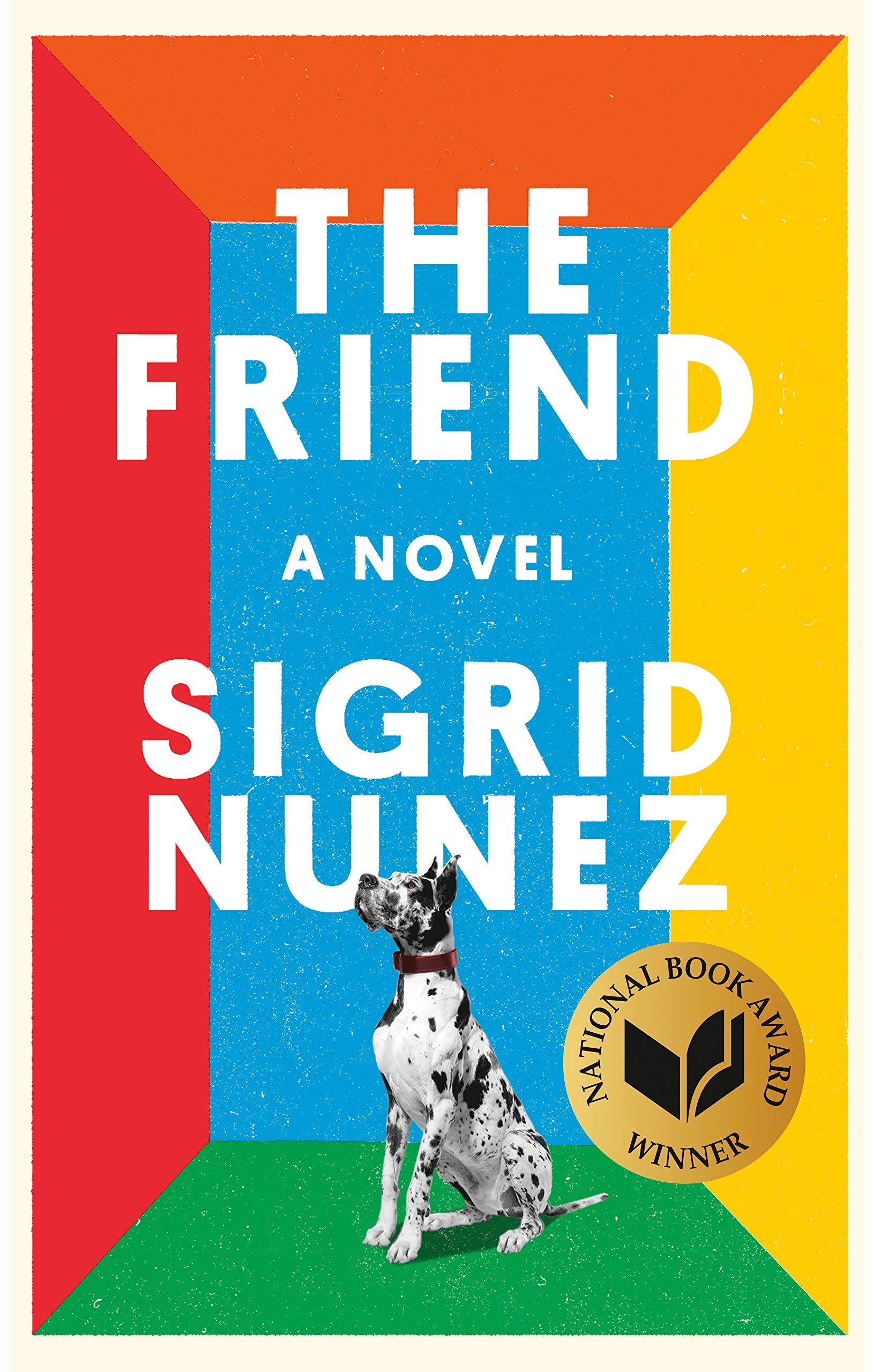
I heard Sigrid Nunez speak at the National Book Festival in the fall of 2019 and was prompted to read her latest book (at the time), The Friend. The novel opens with an anecdote about women in the 1980’s in California who were Cambodian war refugees who complained to doctors that they couldn’t see. The doctors found nothing wrong with their eyes or brains and, while some thought it was malingering, others concluded that it was a psychosomatic response to the trauma they had experienced. With this account, Nunez establishes several motifs that run throughout the novel: blindness, men who mistreat or don’t believe women, and the consequences of grief. The ideas soon come together again when the narrator, a woman who has just lost her friend to suicide, says, “It’s true that if you cry hard enough for long enough you can end up with blurred vision” (3). The narrator reluctantly, and against her apartment house rules, ends up taking her friend’s dog because wife number 3 doesn’t want him and says the friend wanted her to have him. The development of the relationship with the dog seems important to the woman in healing from her grief. The book is not a straightforward story, often meandering off in a series of anecdotes or a commentary about writing and books. The narrator and her friend are college professors and writing teachers (like the author). The book is full of eloquent thoughts and while there’s a story to enjoy, the best part is the reader’s access to the narrator’s thoughts and feelings.

· I have always loved Ann Patchett’s books and her newest, The Dutch House, is a wonderful book about memory and the lasting effects of childhood. In this respect, it reminded me a bit of Fifth Business in which the narrator traces the relationships and patterns of behavior in later years back to a pivotal childhood event. Here, Danny and Maeve, brother and sister, are first traumatized by the departure of their mother to India when they are 3 and 11, respectively, and then later by the addition of a new, young stepmother who throws them out when their father dies (shades of Cinderella). Over the next several decades, Danny and Maeve find themselves parked outside The Dutch House, the name for the family home from which they have been evicted and are no longer welcome, reliving and rehashing events from the past. One of the more interesting aspects of the novel is that characters both remember events differently and have varying amounts of knowledge. Tom Hanks reads the book and I think that is in part why I liked it so much. He brings Danny to life and makes it easy to see things from his point of view.
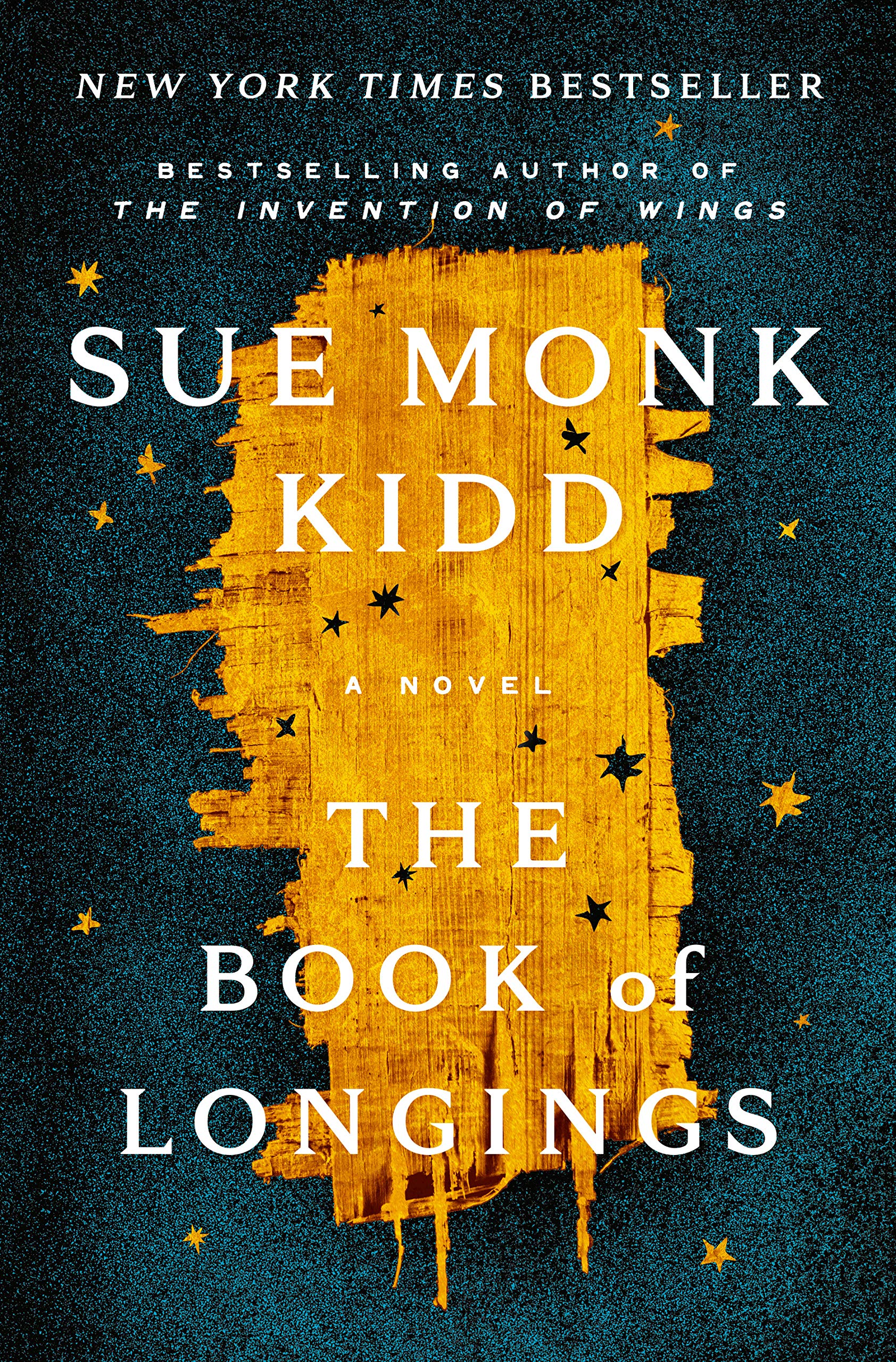
· The Book of Longings by Sue Monk Kidd begins: “I am Ana. I was the wife of Jesus ben Joseph of Nazareth” (3), but this turns out to be but one of many identities for Ana and not the central focus of the story. Ana is a strong young woman who loves reading and, most of all, writing. Kidd plays with the idea that Ana is one of the authors of the scrolls found at Nag Hammadi, which perhaps provide evidence of a wife for Jesus and, more convincingly, women in his ministry. While Kidd skirts the issue of whether Jesus is the son of God, she does a great job of re-creating a sense of time and place and, in her heroine, she has created a woman who is both modern in spirit and ambition and who deals bravely and fiercely with the constraints of her world.
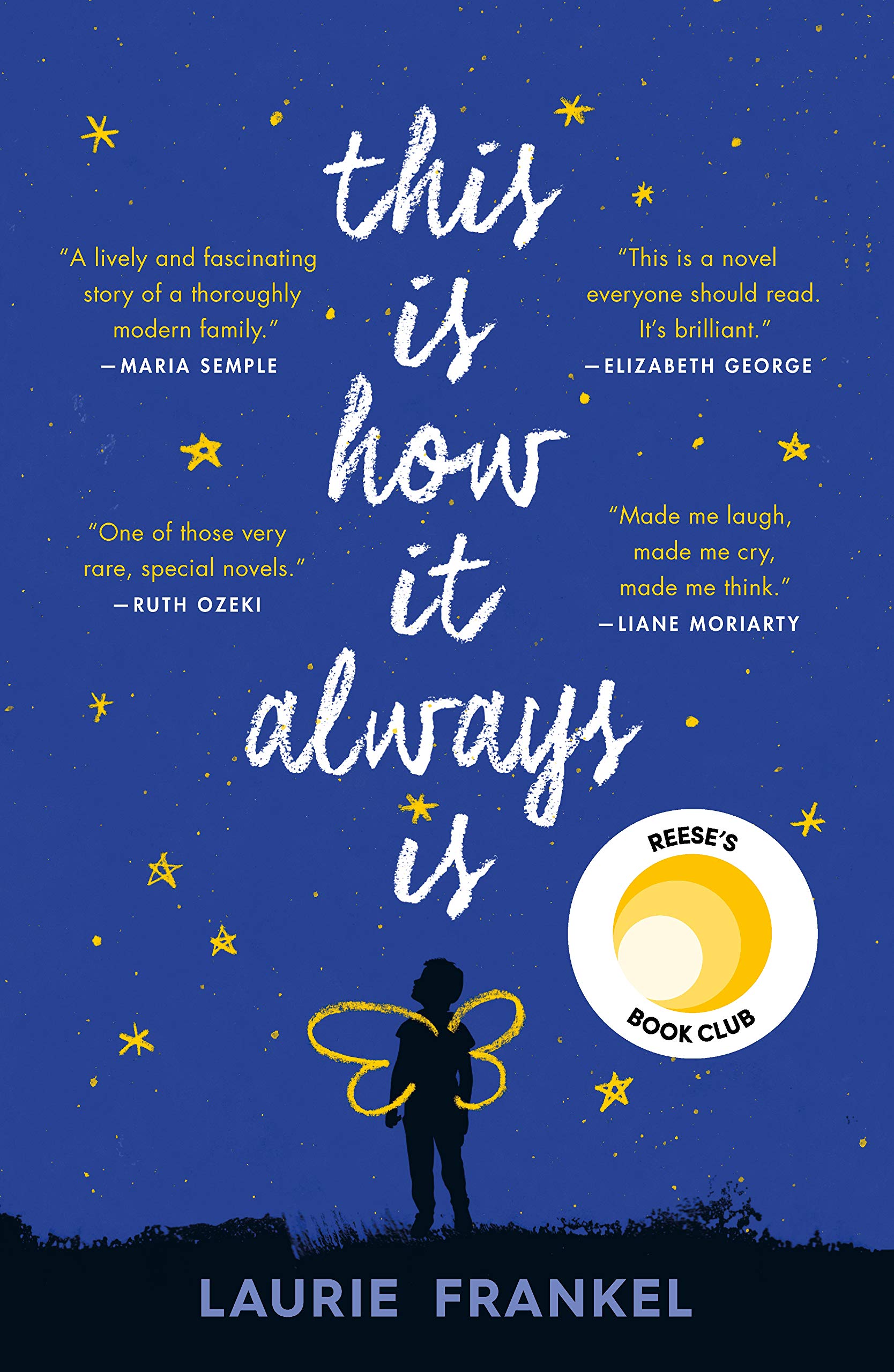
· Perhaps my favorite read of the whole year is Laurie Frankel’s This Is How It Always Is, a novel that tackles the complicated lives of a family with a transgender child. One morning when he is five years old, Claude comes down to breakfast in a dress with earrings and he wants to take a purse to school. He also declares that he wants to be a princess when he grows up. Thus begins a ten year odyssey for the Walsh-Adams clan (Mom Rosie, Dad Penn and the five boys) as they try to embrace the choices of this youngest child whom they love while protecting him/her from a culture that is less supportive. The novel never shies away from presenting the challenge of navigating the world for a child and her family in which one doesn’t conform to the mold. It’s a book that makes you laugh, tear up and mostly think.
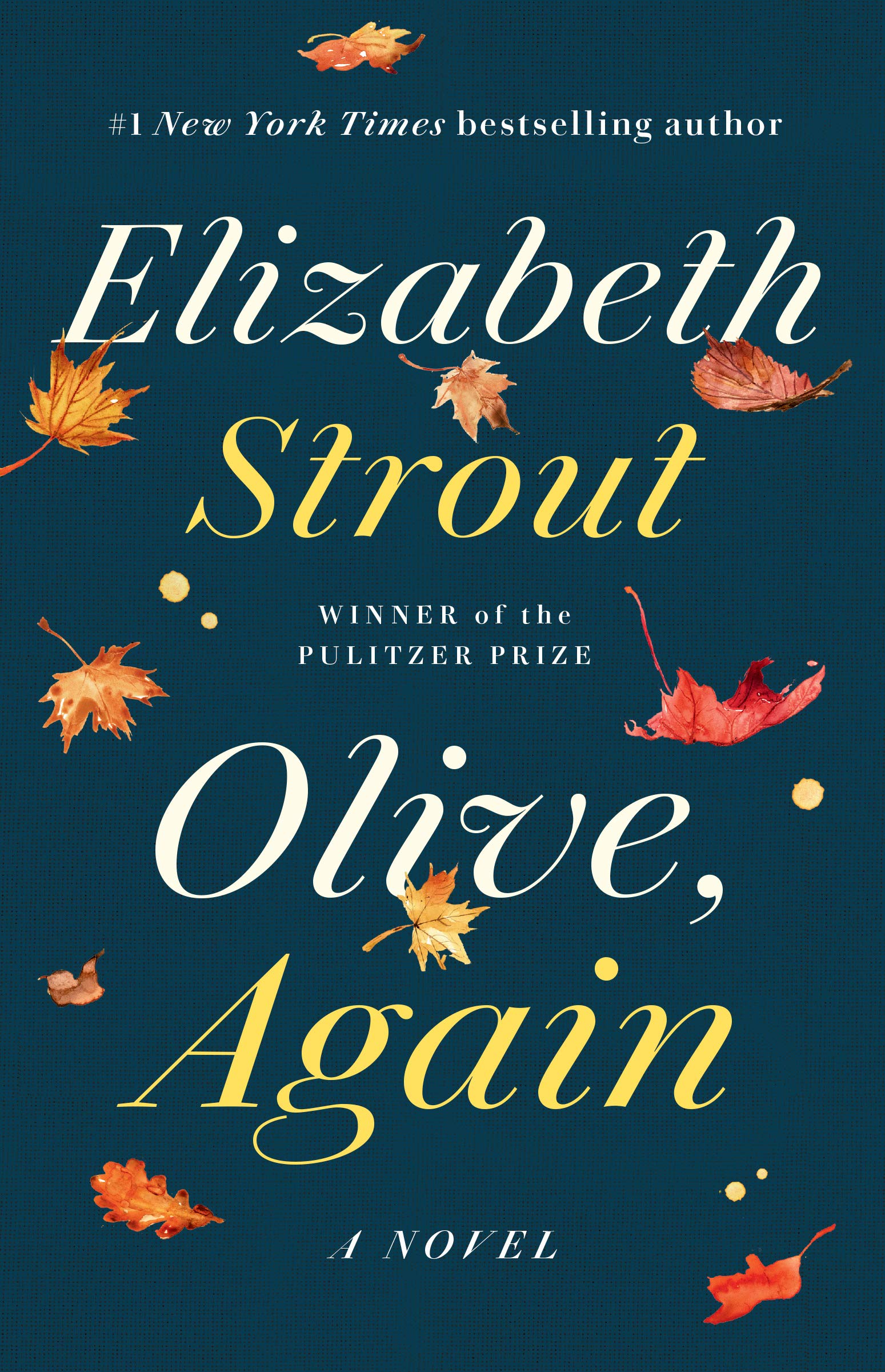
· A follow-up to Strout’s Olive Kitteridge, which won the Pulitzer Prize in 2009, Olive, Again returns to Crosby, Maine, the small town in which Olive lives. Like the first book, the story is told through a series of interconnected short stories in which Olive is either the protagonist or, in a few cases, a minor character. The effect of occasionally shifting Olive to the background is to provide the reader with a different perspective of the title character, which is central to one of the book’s main themes, that of Olive coming to terms with the disparity between how she sees herself and the world and an outer reality. In the first book, we meet Olive, a retired math teacher married to Henry, a man who sees his marriage to Olive as both a blessing and a curse. Olive appears to the reader as a bit of a curmudgeon who doesn’t like change and who often alienates people with her matter-of-fact manner. As the second book begins, Olive is in her 70’s, now a widow, and estranged from her only son, Christopher, who is married to Ann, a woman Olive doesn’t much like. Olive is now coming to terms with what it means to grow old and to reflect on choices that she has made that have had far-reaching consequences. You don’t have to have read the first book to enjoy this one, but it is a richer experience if you are able to see the transformation of Olive over several decades.
Also Recommended:
In A Burning by Megha Majumdar, three characters in modern India who are all striving for greater position in their society become connected in the wake of a disaster.

Kevin Wilson’s Nothing to See Here possesses surprising depth and pathos despite the rather humorous element of two children who, when upset, spontaneously burst into flames.
In The Vanishing Half by Brit Bennett, two sisters raised in an African American town where people aspire to literally become whiter, choose different futures: one embraces her Black heritage while the other passes as White.

I love pretty much everything that Frederik Backman writes and that includes
his latest, Anxious People. A group of seeming strangers comes together and is held hostage at an apartment showing, but they gradually realize their surprising connections.
Jodi Picoult’s latest, The Book of Two Ways, opens with a plane crash in which the protagonist, Dawn, survives. As the plane is going down, she is shocked to find that she is thinking not of her husband and daughter in Boston, but rather of her long-lost love whom she left behind in Cairo. Fifteen years earlier as a graduate student in archaeology, she was obsessed with the Egyptian “Book of Two Ways,” which was buried in the tombs and which provided two different options for the dead to reach the afterlife. Picoult plays with this dual route idea by alternating chapters between a life for Dawn with her archaeologist and the life she originally chose when she returned to the United States.


The book I most wanted to like but didn’t: Dear Edward by Ann Napolitano
Recommended by several friends whose taste I respect and grabbing a spot on several “Best Books of the Year” lists, clearly there’s something to be said for this book. . .but I just didn’t get it. Edward, a 12 year-old boy who is moving cross-country with his family finds himself the only survivor of a crash in which 191 other people are killed. This distinction brings with it a strange sense of notoriety in which people travel great distances just to see him and survivors of the plane’s victims reach out to him in letters. The chapters alternate between Edward’s attempts to go on with a “normal” life while coping with the trauma and back stories of some of the people who were on the plane as well as a recounting of the few hours of the flight itself. I didn’t understand the point of developing the characters who you knew from page 1 were dead. It seems like there was plenty of material in Edward’s story alone.
Worst Book I Read This Year: The Coast to Coast Murders by James Patterson and J.D. Barker
I reluctantly read this after my 90-year-old father pushed it into my hands and said, “Read this and explain the ending to me.” I threw it on the pile to be forgotten but two weeks later he asked if I had finished. My dad doesn’t ask much of me, so I decided to go ahead and read it. I understand that James Patterson was good at one point in his career but since he started churning out books with co-writers at the rate of 5 or 6 a year, I think there is little quality control. Despite alternating between several different narrators, there was no change in voice. There was also very little description and what little there was – of gruesome murders – was unpleasant.
Most disappointing book: Ready, Player Two by Ernest Cline.
Cline’s first book, Ready, Player One, was a page-turning inventive romp through a virtual world. The much-awaited sequel offers absolutely nothing new. The plot is almost identical and all of the allusions to -80’s culture that were fresh and clever before now just seem repetitive and stale.
And finally, I keep track of the books that I have read on Goodreads, which allows you to set up a yearly reading challenge, and provides you with year-end statistics that only a true book nerd can
Shortest book read – The House by Michael McDowell – 173 pages
Longest book read – Troubled Blood by Robert Galbraith – 944 pages
Average book length in 2020 – 355 pages
Most popular – The Silent Patient by Alex Michaelides – 1, 197, 697 readers on Goodreads (Which I gave 3 stars)
My average rating: 3.6 stars

No comments:
Post a Comment